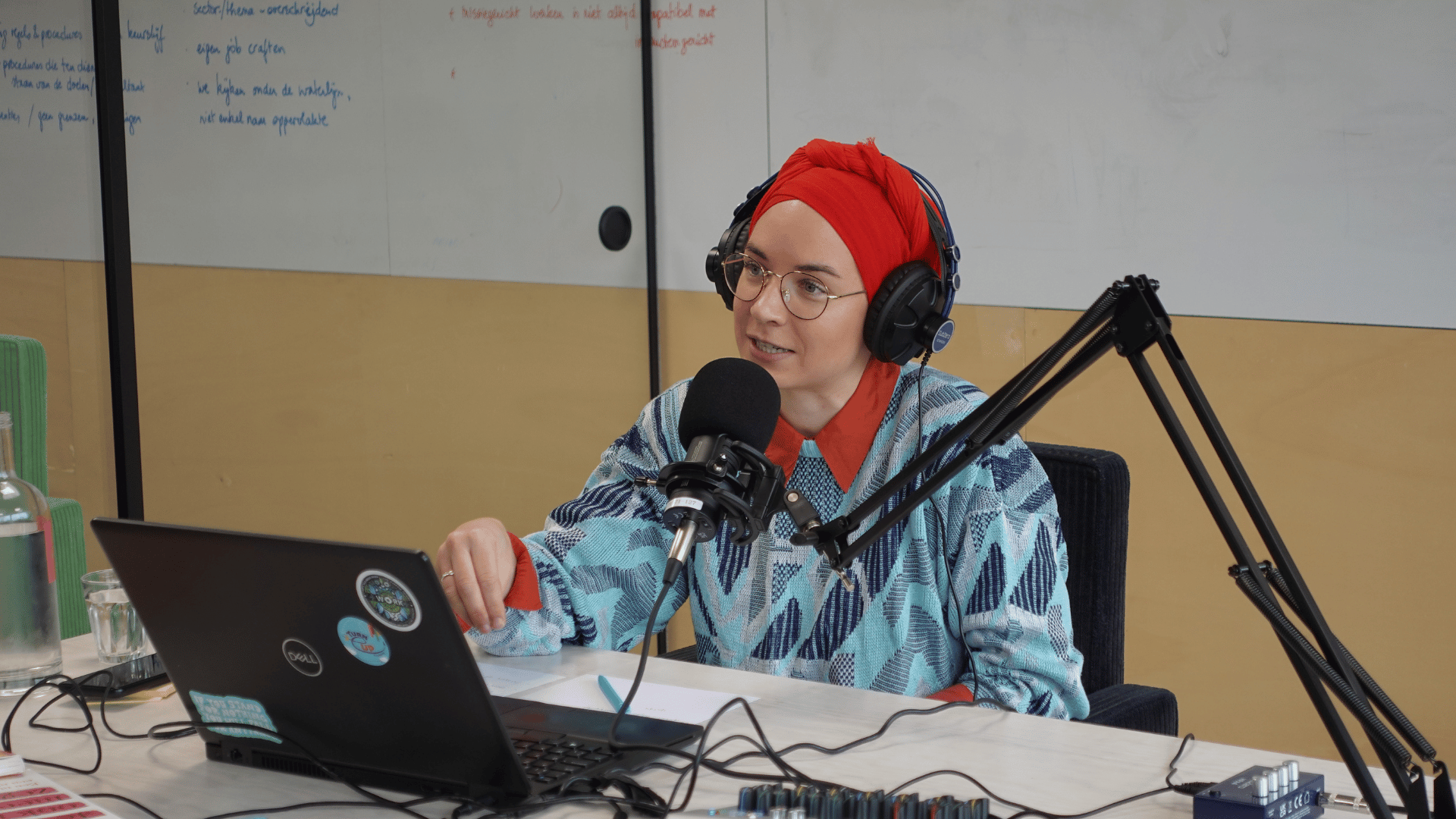
This article is inspired by a podcast conversation hosted by Bart Wuyts on the topic of inclusion at work. The full episode (in Dutch) is available here.
Inclusion a word that is used quickly — and reduced just as quickly. It is often narrowed down to visible differences or numbers that prove an organisation is “representative.” But inclusion is not about headcount. It is about how we work together, how we listen, and how we make decisions.
In a podcast conversation hosted by Bart Wuyts, we explored what inclusion actually asks of organisations, teams and individuals. These are some reflections that continue to resonate.
Difference exists, whether organisations actively engage with it or not. It shows up in - amongst other things - life stages, health, educational access, neurodiversity, social background and migration history.
Inclusion, however, is a choice. It becomes visible in everyday practices:
- Who gets speaking time?
- Whose input is taken seriously?
- Who feels safe enough to disagree?
Visible differences often receive attention. Invisible differences often shape workplace dynamics just as strongly.
Most teams operate around an implicit norm. Those who deviate from that norm are often labelled as “difficult,” “too critical,” or “not a fit.”
Yet it is precisely these perspectives that reveal blind spots.
Inclusion does not mean making everyone the same. It means ensuring that difference is not flattened, but able to participate and have influence.
That requires intentional facilitation, psychological safety and leadership that can hold complexity.
We often speak about equal opportunity as if it were self-evident. In reality, networks, language, credential recognition and unwritten rules determine who gains access to work.
Those outside dominant networks face more barriers — not because talent is lacking, but because access is uneven.
That is why inclusion requires structural choices:
- Sharing vacancies beyond the usual channels
- Designing selection panels in an inclusive way
- Re-examining criteria and assumptions
- Actively broadening social capital
An inclusive team does not come into being simply because difference is present. It emerges when structures allow people to participate meaningfully and shape outcomes.
This involves how decisions are made, how feedback is exchanged, and how psychological safety is built into daily practice.
Organisations often experience tension between representation and meritocracy.
Positive action is not about favouritism. It is about recognising structural disadvantage so that people can arrive at the same starting line.
When someone begins at minus ten, identical treatment does not create fairness.
It is easy to speak about “the other.” Inclusion asks us to examine ourselves.
Cultural intelligence does not start with learning about other cultures. It begins with understanding one’s own reference points. Why does certain behaviour feel uncomfortable? Why do we interpret silence, directness or hierarchy in a particular way?
Self-reflection is not optional. It is a professional competence.
Inclusion often comes down to learning how to stay with discomfort.
Not every conversation will be smooth. Not every confrontation will feel safe. But when discomfort is avoided, distance grows. When it is acknowledged and worked through, connection becomes possible.
The question is not how to eliminate discomfort. The question is how to move through it without losing the relationship.
Inclusion is not a topic reserved for “others.” Each of us occupies multiple axes at once, such as: health, age, caregiving responsibilities, life stage, background.
Someone who feels fully included today may encounter barriers tomorrow.
Inclusion is not about them. It is about us.
1. Inclusion requires structural choices, not symbolic gestures.
2. Difference only creates value when it can participate.
3. Self-reflection is the foundation of cultural intelligence.
I write and speak regularly about inclusion, systems and the conversations that shape organisations.
If you’d like to receive future reflections directly, you can join The Conversation Layer: the monthly Speaking Bug newsletter.
I would love to welcome you there.