
Many people start with a microphone.
I suggest you start with a question.
Why this podcast? And why now?
Before you invest in gear, logos or hosting platforms, pause. A podcast is not just content. It is positioning. It is voice. It is an invitation into a conversation. And that requires intention.
Below are the first steps I walk through with organisations and changemakers who want to start their own podcast — whether in-house or independent.
In the preparation phase of the in-house podcast trainings I delivered, one question sits at the center of everything: What impact do you want to generate?
Not:
• How many downloads do we want?
• Who could be a famous guest?
But:
• What shift should happen because this podcast exists?
• What conversation is currently missing?
• Who is not being heard yet?
Your answers shape everything that follows: tone, guests, rhythm, language, even episode length.
“Who is your listener?” is one of the first prompts in the preparation checklist
— and it is more complex than it sounds.
Be specific:
• Are you speaking to decision-makers?
• To people directly affected by the topic?
• To insiders, or to those who feel excluded from the conversation?
And ask yourself a second layer of questions:
• Is language a barrier?
• Are you assuming prior knowledge?
• Does your format unintentionally exclude people?
Podcasting can lower thresholds. But only if you consciously design it that way.
• Who is the host?
• Who handles the technical side?
• How long is each episode?
• How many guests?
• What is your publishing rhythm?
Consistency is key.
A podcast that appears regularly builds trust. One that disappears after three episodes erodes it.
Be honest about:
• Your available time.
• Your editing capacity.
• Your energy.
Decide early whether you will:
• Record an entire season first and then publish, or
• Record and publish episode by episode
Both are valid. The first offers stability. The second offers flexibility. Choose strategically.
A name.
A logo.
A jingle.
An intro and outro.
A trailer episode.
These are not decorative extras. They create coherence.
In my trainings, we explore the 12 brand archetypes
That framework helps you clarify:
• Are you the Sage?
• The Explorer?
• The Caregiver?
• The Rebel?
Your archetype influences tone, pacing, music, and guest selection.
Without clarity, branding becomes aesthetic.
With clarity, it becomes identity.
One of my recurring tips reads:
“How do you make language as little as possible a barrier?”
Podcasting is intimate. It enters people’s ears. That requires responsibility.
Avoid unnecessary jargon.
Explain concepts without diluting them.
Invite different perspectives, especially when discussing work, policy, innovation or inclusion.
A podcast can reproduce dominant narratives.
Or it can widen the table.
That choice starts at script level.
Before recording:
• Send a clear invitation text.
• Ask for a short bio.
• Share guiding questions.
A good podcast conversation is structured enough to create depth, but open enough to allow surprise.
Have:
• A pen ready.
• A short script for intro and outro.
• Clarity about timing.
Good preparation reduces editing time — and increases conversational quality.
You do not need a full studio to begin.
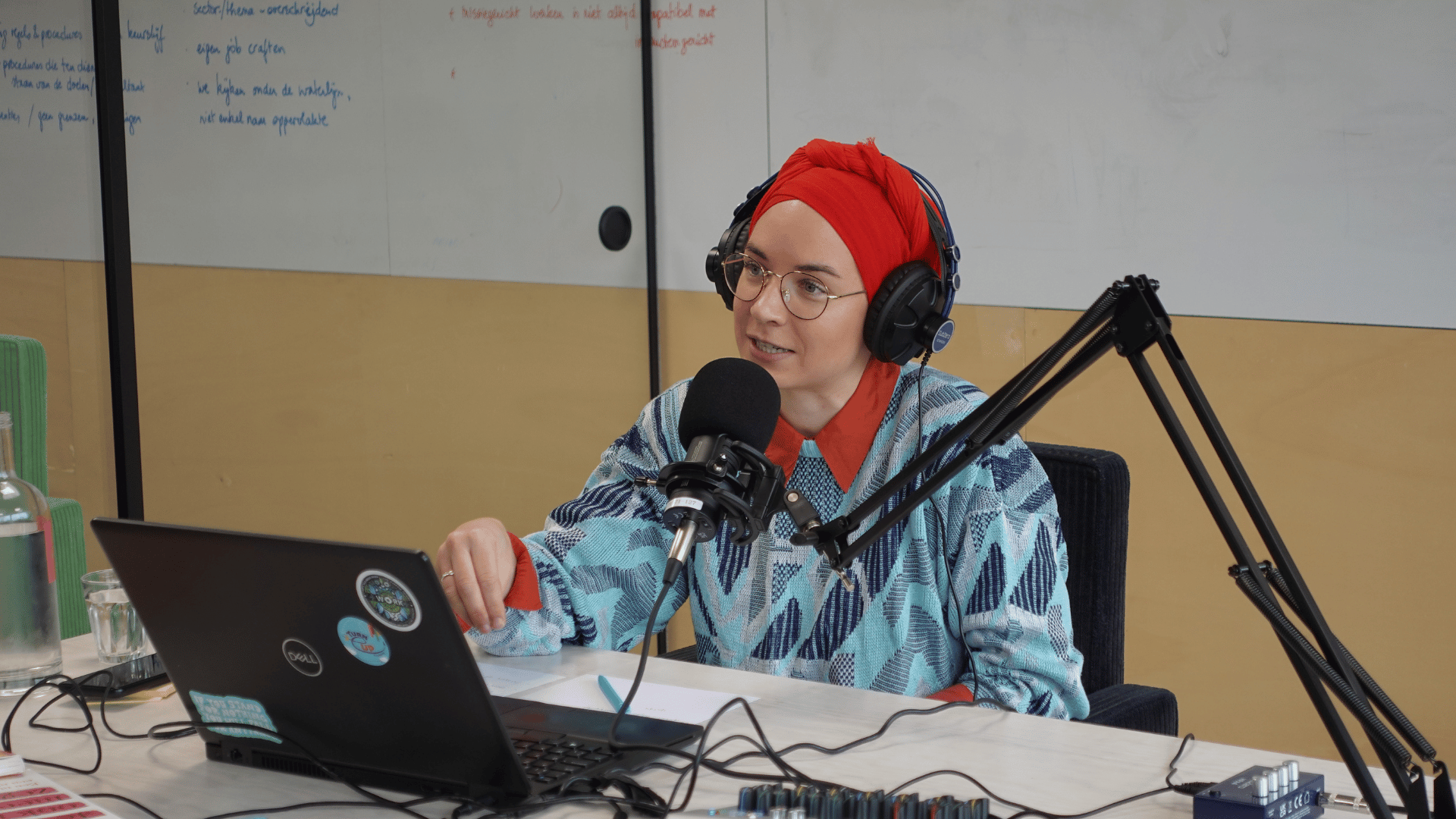
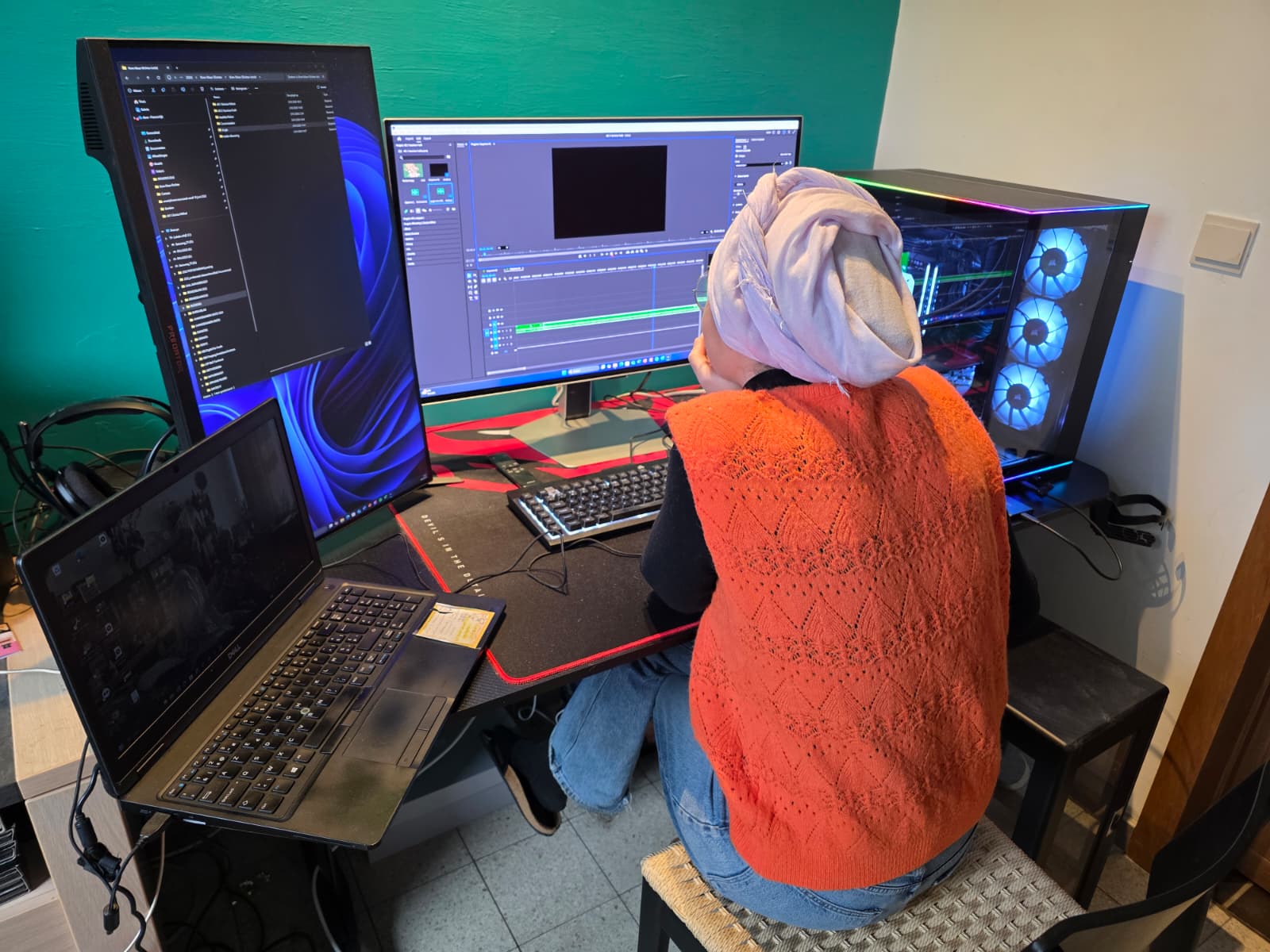
The technical overview that I share in trainings, contain:
• Laptop
• Microphone
• A quiet room (books help with acoustics)
• Optional camera
For editing and distribution, tools such as:
• Adobe Rush
• Adobe Speech Enhancer
• Podbean for hosting
• File conversion tools
The most important lesson:
Test your workflow before publishing publicly.
Record a trailer first.
Run it through your editing flow.
Upload it to your hosting platform.
And pay attention to music licensing. If you plan to publish on Spotify, be careful with copyrighted jingles.
A podcast does not promote itself.
Ask yourself via what channels you’re going to distribute the podcast.
Think beyond Spotify:
• Newsletter
• Website
• Internal communication channels (if in-house)
Podcasting includes:
• The episode itself
• Promotion
• Context
• Follow-up
Without this ecosystem, even strong content remains invisible.
In the editing workflow, transcription is part of the process
Transcripts:
• Increase accessibility.
• Improve SEO.
• Allow people to quote and share insights.
• Support multilingual audiences.
They are not an afterthought. They are part of responsible communication.
Starting a podcast is not about speaking more.
It is about listening better.
When done well, a podcast becomes a space where complexity can breathe. Where nuance is allowed. Where voices that are often reduced to soundbites can expand.
If you are considering starting one, begin with intention.
Everything else — microphones, music, hosting platforms — can follow.
If you are building conversations that matter — through podcasting, moderation or inclusive communication — you might want to stay close to what we are exploring at Speaking Bug.
Join The Conversation Layer and receive reflections, practical insights and behind-the-scenes lessons on shaping conversations with clarity and care.
I would love to welcome you there.