
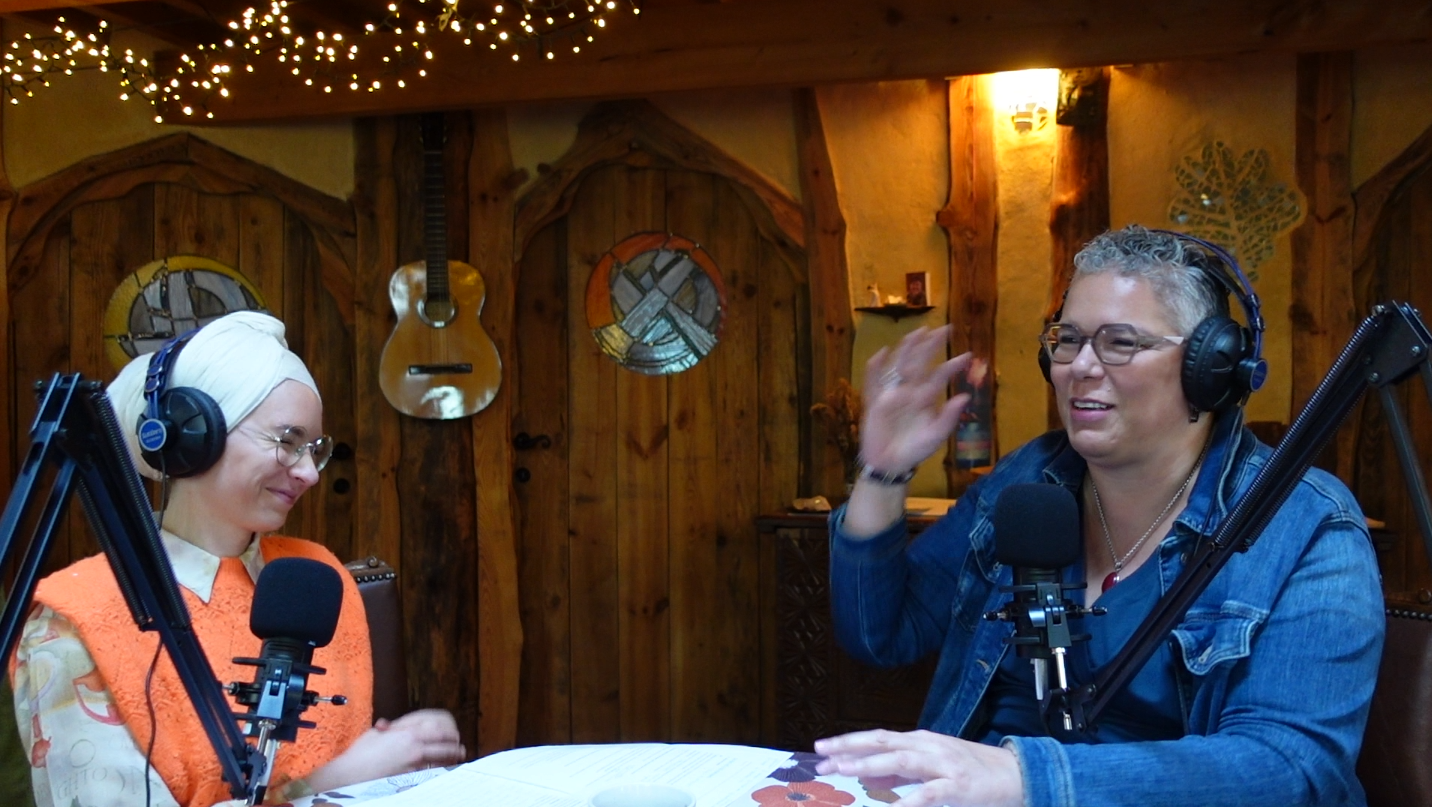
A book for women entrepreneurs — and really for everyone
Yasmina wrote the book because she noticed, in her coaching practice, how often women entrepreneurs struggle to put themselves "on the map" and to ask the right price for what they do. But anyone can take something from it: it's about mindset and beliefs, and about the realisation that we are in fact selling all day long — sometimes a service, sometimes ourselves. It became a deliberately practical book, a manual with scripts, helpful questions and exercises. Theory you can find anywhere; Yasmina couples theory with action, because that's what brings transformation.
A book that needed time to ripen
From the first idea to the finished book, roughly two years passed. Yasmina calls herself — in the words of her coach Eric Schneider — a "slow learner": not slow to understand, but someone who needs time to let things settle. She was guided through the structure by Laurence Verweyen, who helped her get the knowledge in her head onto paper. Like a good wine, she says, a good book doesn't come together in two months: you let it ripen, and yourself along with it. Reaching for the perfect sentence too soon only blocks you; the time you give the book is what ultimately makes it wiser.
The gorillas on your shoulders
The image that runs through the whole conversation: the "gorillas". They start as little monkeys — the meanings we attach as children to remarks and experiences. Feed them "peanuts" (negative thoughts) and they grow into a whole troop of gorillas that start shouting the moment you want to do something. "I want to write a book" immediately wakes the gorilla that wants to keep you safe: who's waiting for that anyway? The art isn't to silence them, but to listen and consciously choose: do you stay on the negative train of thought, or change at the next stop? During the writing, Yasmina's gorillas woke up forcefully too — precisely because she found her own expertise so self-evident that she thought: surely everyone already knows this? (They don't, it turned out.)
Changing trains: awareness, pause, choose
How do you switch to that other train? First, awareness — realising you're on the negative train and that a gorilla is shouting. Then pausing: stopping for a moment before you react, looking at the situation as if from a neutral wall. And then choosing, because too often we believe we no longer have a choice — while algorithms (Bol, Spotify, dating apps) are happy to make us think the choices have already been made for us. Awareness gives you your choice back, starting from a vision: do I know where I want to go, and am I on the right train to get there?
Process first, mindset second — and why that order
Strikingly, the book covers the sales process first, with diagrams and sequential steps, and only then the mindset — even though you'd intuitively expect the reverse. Yasmina chooses that order deliberately: knowing the process brings fear and uncertainty down. Whoever knows which steps are needed to attract clients is already preparing the mindset in the process. A goal ("100,000 euros in revenue this year") is something different from a vision ("helping 5,000 women entrepreneurs grow"). A vision may be so big it makes your knees tremble — it has to stand far enough away not to overwhelm, yet stay graspable. And that same vision gives you something to hold on to when saying no to clients who don't fit, even when it means leaving revenue on the table.
Dealing with rejection
In the section on prospecting, the sales process becomes almost a metaphor for dealing with rejection in life. The fear of being rejected is universal — we want to be seen — and in selling it's inseparable from the result. The statistics are sobering: sometimes ten conversations for one appointment, ten appointments for one client. Especially early in her career, every "no" woke all her gorillas. The shift she learned to make: not "I'm going to get nine noes", but "I'm looking for that one yes". That same intention creates an entirely different dynamic.
Phone calls, coffees, and a love-hate relationship with social media
Yasmina believes in the combination of visibility and the good old phone call — and above all in drinking a lot of coffee. A coffee through your network is less demanding and often more efficient, provided you know the process well. With social media she has an honest love-hate relationship: it's part of the deal, but the endless rules about when and what to post keep changing, and who ultimately benefits? Mostly the social media companies themselves, she notes drily.
Scripts, and the masculine and feminine energy
The book shares scripts and helpful questions generously — a real manual. A script, to Yasmina, is a form of modelling: you take over someone's approach, rigidly at first, and over time make it your own. She also writes about "masculine" and "feminine" energy: the masculine energy is result-driven, perseverance, willpower — sometimes exactly what a next step requires. But it isn't our natural energy and is tiring in the long run; the feminine energy is creating, attracting, making. The key is to consciously choose when to draw on which — and only when it is of service. (It's a nuance she says she keeps evolving on herself.)
Purposeful entrepreneurship — and what it asks of you
Yasmina speaks candidly about the leap to her own business: she sold her apartment in order to start — something she wouldn't necessarily recommend today (and which is no longer required anyway). What she does recommend is purposeful entrepreneurship: doing what gives you energy while serving a greater whole. Entrepreneurship, for her, is the opposite of safety — there are ups and downs, instability, uncertainty — but if you want to grow rapidly as a person, it's the fastest route. Standing still is dying, like a tree that no longer grows.
Money mindset: daring to ask what you're worth
Connected to this is the money mindset, to which she devotes a whole section. The safety you seek is better created within yourself than in the assignments that come in — genuine personal work. Women, she says, are quick to help others but poor at helping themselves, and may learn to receive. Don't be modest, just be honest: a good baker, too, will happily say he bakes the best bread. Modesty helps no one — not your clients, and not yourself. A gender and cultural lens plays a part here: where a man applying for a job he meets 90% of says "I'm the perfect person", a woman immediately looks at what she can't do. Much of what life truly demands — money mindset, dealing with emotions, entrepreneurship — we're never taught at school.
Investing in yourself, intuition versus impulse, and what comes next
Yasmina reinvests, by her own account, around 90% in herself: courses, books, conversations that broaden her world. Her choices are rarely strategic; her great teacher Eric Schneider came onto her path through pure intuition (and impulsiveness, which she has had to learn to temper through her ADD). The distinction between intuition and a gorilla is something she keeps exploring: intuition is pausing for a moment and feeling — does this make me genuinely happy and enthusiastic, or am I doing it for status? The book dates from 2023, and the Yasmina of 2026 would write some things differently. A next book is likely on the way too — no longer about selling, but flowing from her stage shows around journey to inner freedom. In this episode she says it out loud for the first time.
The last word
To close, Yasmina reads a passage that captures the heart of it for her: the greatest obstacle to claiming your own worth is comparing yourself to others — often with someone who is already much further along, or with a glossy social media image. Not all that glitters is gold. We compare ourselves with people who are already twenty-five chapters ahead, but do we also see the road they travelled — the falling and getting back up?
De gouden sleutel naar zakelijke groei by Yasmina Fadli was the starting point for this conversation. Don't want to miss an episode? Subscribe to Kom Maar Dichter on your favourite podcast platform, and join The Conversation Layer — and each conversation, transcript and extra reflection will land straight in your inbox.
Come closer.