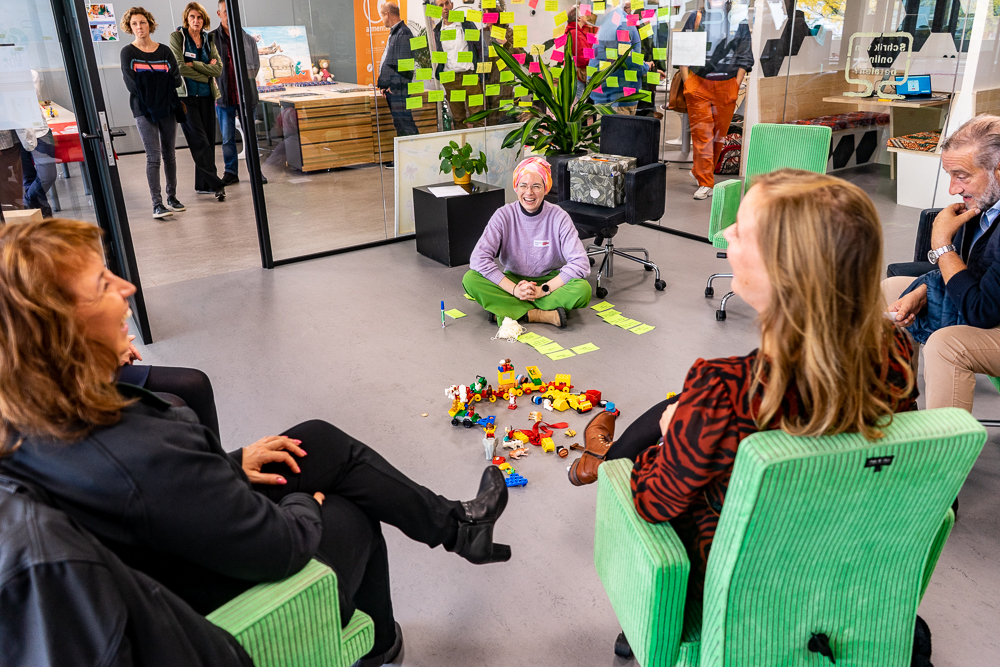
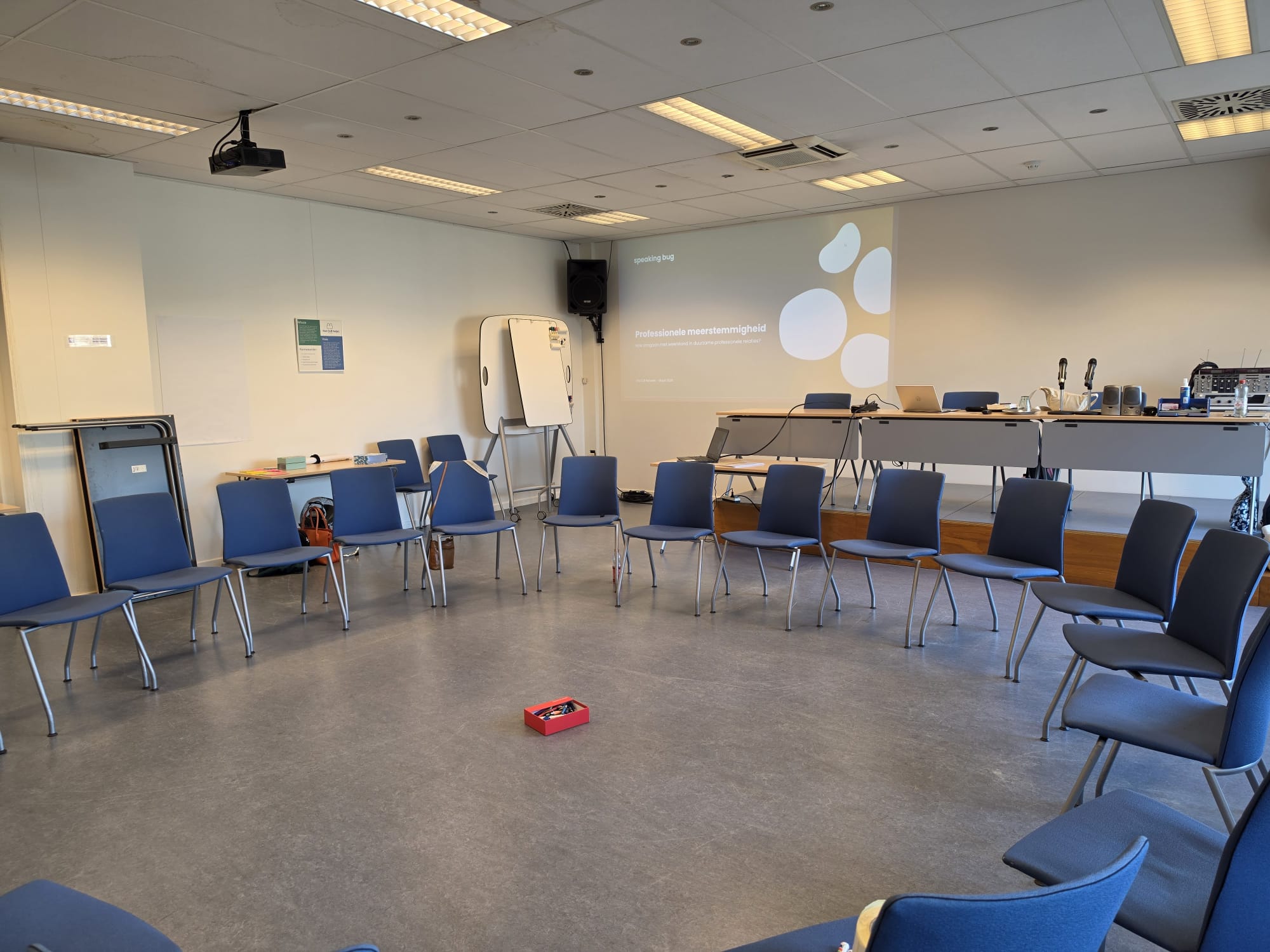
Many workshops, meetings and learning spaces start with good intentions.
We want people to connect. To speak. To feel comfortable. To contribute. So we design an activity that will make that happen.
Introduce yourself and share something personal.
Tell us how you are feeling in one word.
Turn to the person next to you and discuss.
Everyone has to contribute at least once.
None of these are inherently bad ideas.
But there is a question underneath them that we rarely ask:
Who gets to decide what meaningful participation should look like?
That question is at the heart of the Speaking Bug Invitation Model.
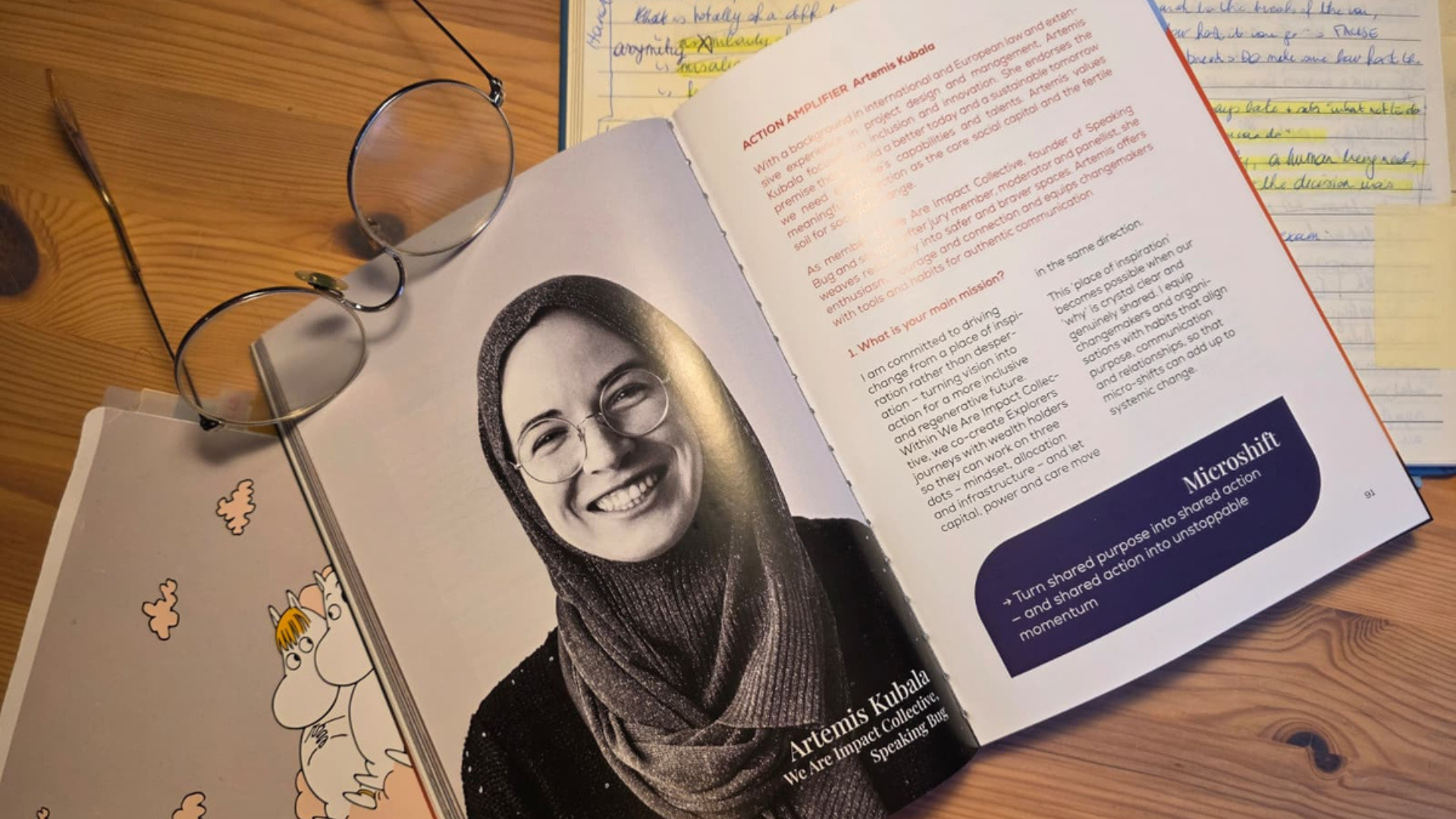
The Invitation Model is a facilitation framework developed by Artemis Kubala at Speaking Bug. It helps facilitators, trainers, moderators and meeting leaders design participation without prescribing exactly how people should participate.
It is built around three questions:
1. Intention — What am I inviting people into?
2. Capacity — What can this group carry today?
3. Context — What does this conversation need?
Together, these questions shift the focus from How do I get people to participate? to:
What conditions can I create for meaningful participation?
That distinction matters.
An instruction determines what participation should look like.
An invitation creates a possibility.
People can accept an invitation. They can approach it cautiously. They can engage in a different way than you expected. Sometimes, they may choose not to take it up at all.
That does not necessarily mean the facilitation has failed.
Choice is part of the design.
Activities are often chosen because they are familiar, engaging or simply part of a facilitator's repertoire.
The Invitation Model starts somewhere else.
Before choosing the activity, ask:
What am I actually inviting people into?
Connection?
Curiosity?
Reflection?
Disagreement?
Decision-making?
Personal disclosure?
Collective ownership?
These are very different invitations.
Imagine opening a workshop by asking everyone:
“Tell us something about yourself that nobody here knows.”
Perhaps your intention is connection.
But the activity has quietly added another invitation: personal disclosure.
Those two things are not the same.
People can connect through humour, shared work, curiosity, observation, disagreement, stories, questions or simply doing something together.
Once the intention becomes clear, the facilitator has more freedom to design an invitation that serves it.
A good activity in the wrong group can become a bad intervention.
Capacity asks us to look at the people in front of us rather than only at our facilitation plan.
How well do they know each other?
How much trust is present?
Is there tension in the room?
Are there power differences?
Are people tired?
Have they chosen to be here?
What has happened immediately before this session?
What are we implicitly asking people to reveal?
Consider a check-in that asks everyone to describe how they are really feeling.
In one team, that may create welcome openness.
In another, the manager who will conduct everyone's performance review next week is sitting in the circle.
The question has not changed.
The capacity of the group has.
This is also why participation cannot be designed around the most confident person in the room.
People differ in language, status, communication style, neurotype, cultural expectations, familiarity with the group and comfort with spontaneous participation.
A format that feels energising to one participant may create a barrier for another.
Capacity is not about assuming what people can or cannot handle.
It is about refusing to pretend that context does not affect participation.
The third question moves beyond individual participants.
What does this particular conversation need?
Perhaps people need to build enough trust to discuss something difficult.
Perhaps they need clarity.
Perhaps disagreement needs to become visible.
Perhaps the group has been talking for months and finally needs to make a decision.
Perhaps the most useful thing you can do is stop adding activities and give people time to think.
The same group can therefore need completely different invitations on different days.
Imagine a team meeting after a difficult organisational announcement.
You had planned an energetic opening designed to create connection.
Your intention may still make sense.
The activity may no longer do so.
Good facilitation is not simply executing the plan well.
It is noticing when the plan no longer serves the room.
Suppose you are facilitating a group of twenty people who do not know each other well.
You want them to start talking to one another.
A conventional approach might begin with:
“Find someone you don't know and share a personal story about a challenge you recently overcame.”
Now apply the Invitation Model.
Intention:
You want to create initial connection and make later conversation easier.
Capacity:
The group has only just met. There is little relational trust. People also have different levels of comfort with personal disclosure.
Context:
They will need to work together later in the session, so some initial interaction is useful. Deep personal connection is not necessary yet.
The resulting invitation could become much lighter:
“In a moment there will be some time to meet someone you haven't spoken with yet. You might exchange what brought you here, something you're curious about today, or simply start wherever your conversation takes you.”
The objective has not disappeared.
But the facilitator has stopped prescribing exactly how participants must achieve it.
That is the shift.
An invitation is not the same as making everything optional
This distinction is important.
The Invitation Model does not mean that facilitators should never give instructions, set boundaries or ask people to do difficult things.
Some processes require structure.
A decision-making meeting needs decisions. A training may require practice. A facilitated conflict cannot always remain comfortable.
Choice also exists within boundaries.
The question is whether every demand we place on participants is actually necessary.
If everyone needs to choose between three proposals, that participation may be essential.
If everyone needs to reveal something personal before they are allowed to discuss those proposals, it probably isn't.
Good facilitation does not remove structure. It becomes more deliberate about where structure is needed.
There is a subtle assumption behind many participation techniques:
If people are not participating, the facilitator needs to find a better way to make them participate.
The Invitation Model starts from a different assumption.
Before asking how to activate people, examine the conditions you have created.
Do people understand why their contribution matters?
Is there enough safety to disagree?
Does the format privilege people who think quickly and speak easily?
Can people contribute without disclosing more than they want to?
Do different forms of participation count?
Has anything meaningful been done with people's previous contributions?
Sometimes what looks like disengagement is not a lack of motivation.
It is information about the design.
Before choosing your next check-in, discussion format, workshop exercise or meeting opener, try starting here:
What am I inviting people into?
Name the actual intention before choosing the activity.
What can this group carry today?
Look at trust, relationships, power, energy and the different ways people may enter the conversation.
What does this conversation need?
Design for what is happening here and now, rather than for an abstract ideal participant.
Then choose the format.
Not the other way around.
Because meaningful participation is not something we extract from people.
It is something we design the conditions for.
Naming your intention is the first move. But connection and curiosity are not the same invitation, and neither asks the same thing of a group.
In This Is Not an Icebreaker, this first question is worked out into six invitation types: presence, connection, curiosity, safety and choice, agency, and meaning.
They are not a sequence to work through, and not categories that exercises belong to. They are six answers to the question what am I inviting people into? - and the answer changes what a good opening looks like. An invitation to presence asks people to arrive. An invitation to agency asks them to shape what happens next. Both can be right. Rarely on the same morning.
Once you name which of the six you're reaching for, choosing the format becomes much simpler. Often it becomes lighter, too.
The Invitation Model underpins the Speaking Bug Library, a collection of practical resources for designing meaningful conversations, learning and participation.
This Is Not an Icebreaker applies the model specifically to the way we open meetings, workshops and learning spaces -moving from obligatory icebreakers towards meaningful invitations.
This Is Not an Icebreaker turns the Invitation Model into practice: 15 ready-to-use invitations, organised around six different intentions - from presence and connection to agency and meaning. Use them as they are, adapt them to your group, or use the framework to design your own.